01
Train the body that thinks
Clarity, attention and mental endurance also rest on a physical base. It is trained methodically, like strength or endurance.
Quarbon designs physical training programmes for high-cognitive-load teams (R&D, deeptech, engineering), with a precise goal: supporting attention, clarity and mental endurance, with measurements to back it up. Not generic wellness.
In high-cognitive-load professions, the quality of decisions depends partly on the physical condition of those who make them. Properly programmed, training remains an often-underestimated lever of cognitive performance.
Clarity, attention and mental endurance also rest on a physical base. It is trained methodically, like strength or endurance.
The schedule is the number-one constraint. The service is embedded: one short session per week, at your offices, without overloading the working week.
Group training sessions, embedded in the working week of high-cognitive-load teams, in R&D, deeptech and engineering. The goal: sustaining their cognitive performance over time, and measuring it. Results rest on objective testing, not just on what's self-reported.
A 90-minute session, with no free weights, to let your teams experience the link between physical condition and intellectual performance, through practice and through data. A half-day format is also available.
A renewable subscription: a one-quarter priming phase (one short session per week, progressive intensity), then renewal into continuous follow-up. A coached framework, with measured progression.
Detailed outlines, method, tracked markers and terms on the dedicated page.
Quarbon uses training as a physiological tool, in service of cognitive performance: no nutrition, no life coaching. The same method structures every coached programme, individual and collective alike.
Introduction to the fundamentals: posture, bracing and clean execution of the basic movements.
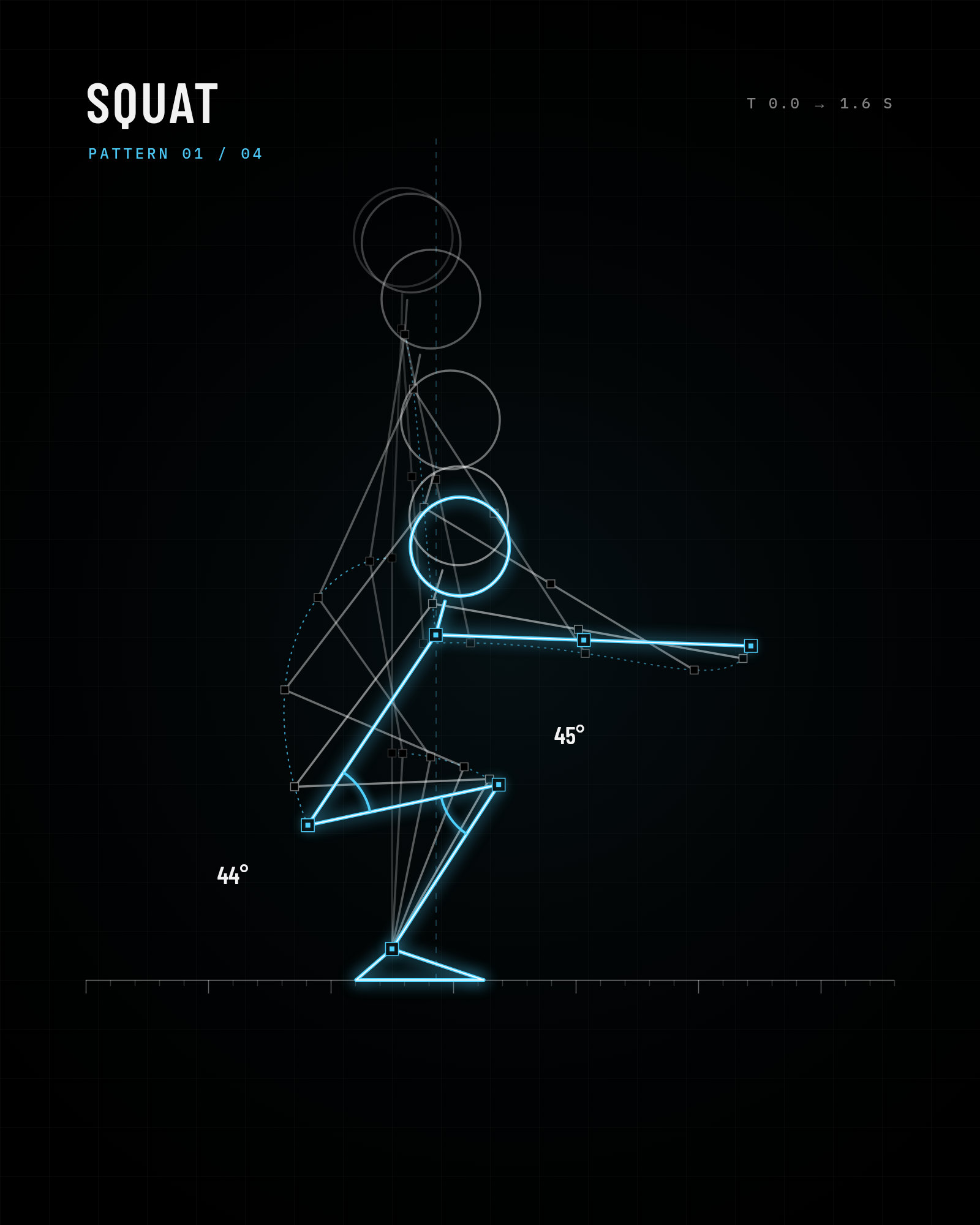
Testing the fundamental patterns: squat, Romanian deadlift (RDL), push-ups, rows.
Targeted work to develop these capacities, under progressive and supervised load.
Conditioning adapted to each person's level, as AMRAP, EMOM or HIIT.
This frame describes the coached programme. The 90-minute discovery workshop is a lighter version of it, with no free weights.
Quarbon is an entrepreneurial project supported by Université Paris-Saclay. The protocol is in its use-case and scientific-validation phase, ahead of deployment with high-cognitive-load teams. Here is where the project stands.
A frame built on 7+ years of individual and group coaching: 70+ profiles coached, hundreds of people in group classes.
The protocol is applied and measured with varied audiences, one-to-one and in groups, to test its frame and its markers.
The validation process for the protocol is under way. Until it concludes, the results shown on this site remain field observations, not established evidence.
First deployment with R&D, deeptech and engineering teams, through a pilot cohort of three companies.
Join the pilot cohortBefore being deployed with teams, the method was built in the field, with varied audiences. Below are the trends observed across 21 documented one-to-one programmes, over 12 to 24 months and beyond: real trajectories, not yet scientific conclusions.
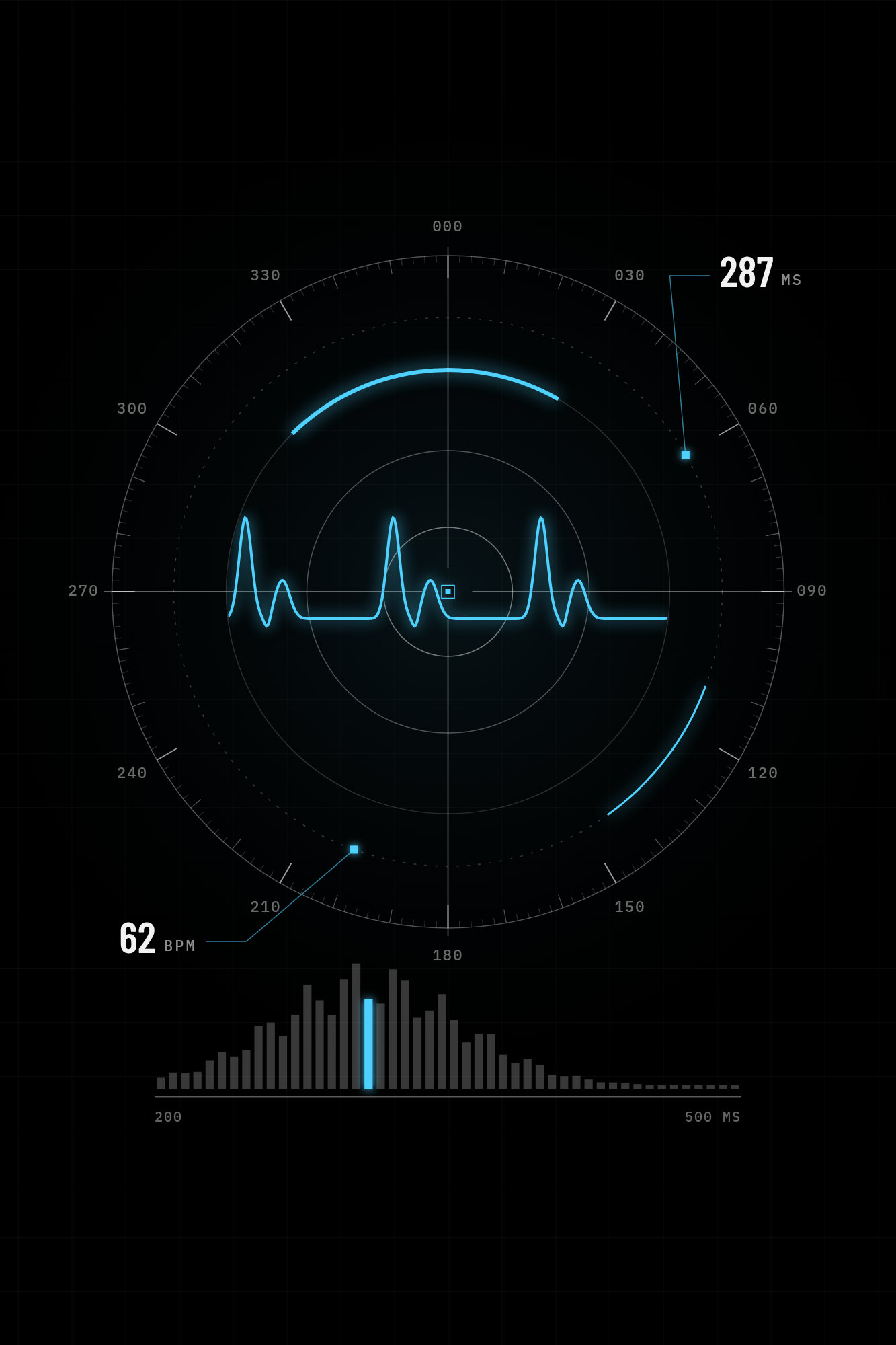
During each session, everyone follows their heart rate and zone in real time. It is the monitoring tool I built.
Marked progression on the squat, the RDL and rows, over 12 to 24 months of regular coaching.
Improved endurance and a lower resting heart rate observed over time.
A portfolio of varied profiles, measured on agreed markers, from beginner to advanced.
A very tight leadership schedule. A full-body programme centred on the fundamental patterns reached intermediate strength standards by maximising every minute of training.
5 h/week, advanced periodisation across several cycles. A high-level body recomposition and continuous progression, over more than 18 months of follow-up.
A saturated schedule, ~2 h/week plus weighted running. A maintenance-and-performance goal: working loads and endurance in continuous progression.
A sedentary profile, a programme centred on six fundamental patterns. Strong progression of working loads from the first sessions, which builds a technical base.
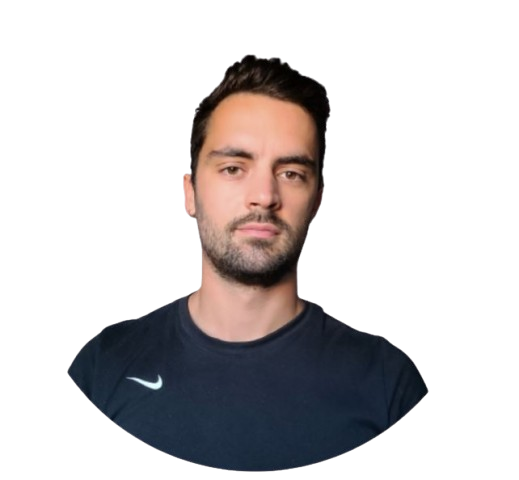
It was in 2017, amid the intensity of audit work, that I understood something simple: intellectual performance doesn't hold without a physical base. The long days, the constant mental load, the concentration demanded without let-up: all of it rests on a physiological infrastructure we almost always neglect.
That realisation is what shifted my path, from finance toward physical preparation. Since then I have coached 70+ individuals (university professors at top engineering schools, executives, researchers, high-level amateur athletes) and led groups: Volleyball at Nationale 3 level, group classes and training for hundreds of people, including 40+ in monitored sessions.
Today I am building Quarbon, an entrepreneurial project supported by Université Paris-Saclay (Pépite PEIPS programme), alongside the first year of my Master's in Sport Sciences for Health & Performance at the same university. The protocol is undergoing scientific validation; individual coaching remains my field laboratory.
Master's in Corporate Finance from a top French business school (Rennes School of Business). Audit roles at French Red Cross and KPMG France. The turning point, late 2017.
Independent coach. Over 7 years of individual and collective coaching: 70+ individual clients, group classes and training for hundreds of people, Volleyball coaching at Nationale 3 level.
State-certified diplomas BPJEPS and DEJEPS Sport Coaching at the CREPS of Châtenay-Malabry.
Bachelor's in Sport Science, Sport Coaching specialisation (Université d'Évry Paris-Saclay). Exercise physiology, neurophysiology, determinants of performance.
Designing a physical training protocol in service of cognitive performance. An entrepreneurial project supported by Université Paris-Saclay (Pépite PEIPS programme), now in its use-case and scientific-validation phase.
Year 1 of the Master's in Sport Sciences for Health & Performance at Université Paris-Saclay, alongside the development of Quarbon.
Describe your context in two lines: I'll get back to you within 48h with an honest read on whether a pilot workshop makes sense for you.
Looking for individual coaching? Email me directly.